

How To Use A Digital Camera Manual Settings
This essay is for amateurs who have been shooting a while and experience the want to push the envelope by going to manual fashion. For those who are defended car shooters and never want to alter, I respect and endorse your choice, and wish you lot all the good shooting in the world. But this essay is not for you, so you demand not read any further. Why get transmission mode? Well, at that place are some very practiced reasons to practise so. I believe that all the fun is in transmission shooting, and I also believe that you can unleash your creativity by shooting manual.
I was a JPEG shooter for more than years than I should have been, considering I somehow found camera settings to be scary. I don't know what I imagined would happen if I fix my camera file format to RAW and the punch to "M". I had a photography friend who encouraged me frequently to endeavour the manual mode, and I kept promising to do information technology only somehow never did. Until i day I just did, and I never looked dorsum. I was instantly and permanently hooked. And so if you lot feel that way yourself, I have walked in those shoes and know exactly how you feel!
The v settings that one has to primary to shoot manually are:
Camera ISO, Shutter Speed, Aperture, White Residuum and Metering method. Easy, correct? HA! Well, in a way it is. The large thing is that y'all just have to get used to those settings. You can do so with some bones understanding of them and how they impact your photograph.
Nasim and the gang have written dozens of articles nearly all these settings, what they mean and how to use them. These articles are important and if y'all haven't read them, delight exercise so using the links beneath, as they volition arrive easier to understand how each works individually. Besides, don't forget that Photography Life has a large library of great photography tips for beginners, and then if yous experience like you want to learn a lot, check all the articles out – there is a wealth of knowledge there.
Table of Contents
Set up Your Camera to Transmission Manner
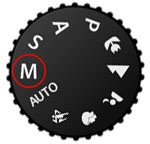 Now we tin jump to where to outset. Information technology's a bit similar decorating your dwelling house – you lot have to start somewhere. Pick a wall colour, pick a carpet color, option a colour out of your furniture, and go from there. In photography, you take to pick a setting to start with and all the rest go from there. And then, to begin, ready your camera to Manual Style. It is very easy to do it. Almost cameras have a "PASM" dial on top of the camera where you can change your photographic camera fashion from. Only rotate the punch to the alphabetic character "M", as shown in the picture to the left. That's all there is to it – your first step is accomplished!
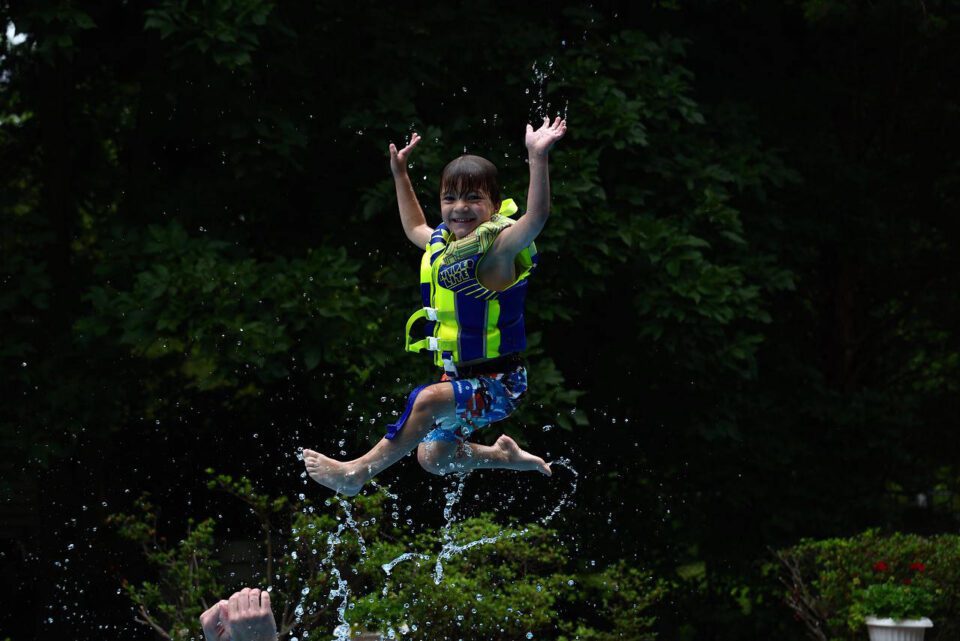
Set Your White Balance
Next, I will help you out with some background settings. These will probably not change during your shoot unless something near your environment changes. As you become comfy shooting in the manual fashion, you lot will be able to decide when a modify is necessary. We will start with White Remainder (WB), which has to practice with the color of light. Your sensor setting should lucifer the color of the light that you are shooting. I will give yous one to start with, but white balance is purely a thing of personal taste. There are no wrong white balance settings. Every bit a matter of fact, as yous shoot manually for a while, you volition brainstorm to come across the colour of calorie-free yourself and will begin to know that you need to change your WB depending on what you lot encounter. Permit me requite y'all an case of this. My sister'south living room has a aureate wallpaper which made the lite in the room very gold colored. Every Christmas my pictures had an ugly yellow (gilded) cast and I never understood why. Until one day I realized that my WB could touch these pictures and I figured out the correct setting for yellow light, and bingo! My pictures came out looking normal.
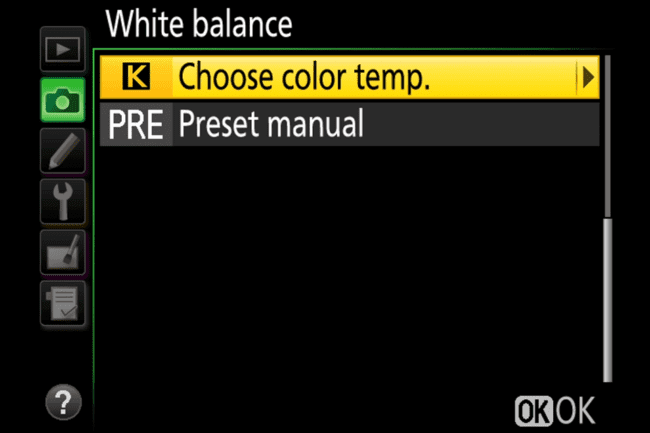
White residue is very important, just there are full general settings that can piece of work in many usual outdoor scenarios. Then gear up your WB to something like 5260 (daylight) to start with, and every bit you discover whether or not you similar that setting, y'all can set it to something more to your taste. Afterward on, if you like your pictures to look a niggling bluer, set up your WB to a smaller number similar 5000. If you want to movement to warmer tones, set your WB to a larger number like 5860. As yous get used to WB, you will beginning to empathize it and not be intimidated by information technology. And as yous apply your WB settings, you will desire to kickoff reading all well-nigh it to increment your understanding, which volition then make you better able to set different white balances. If you struggle with WB and want to sympathise it in detail, check out PL's splendid Understanding White Residuum article for more than details.
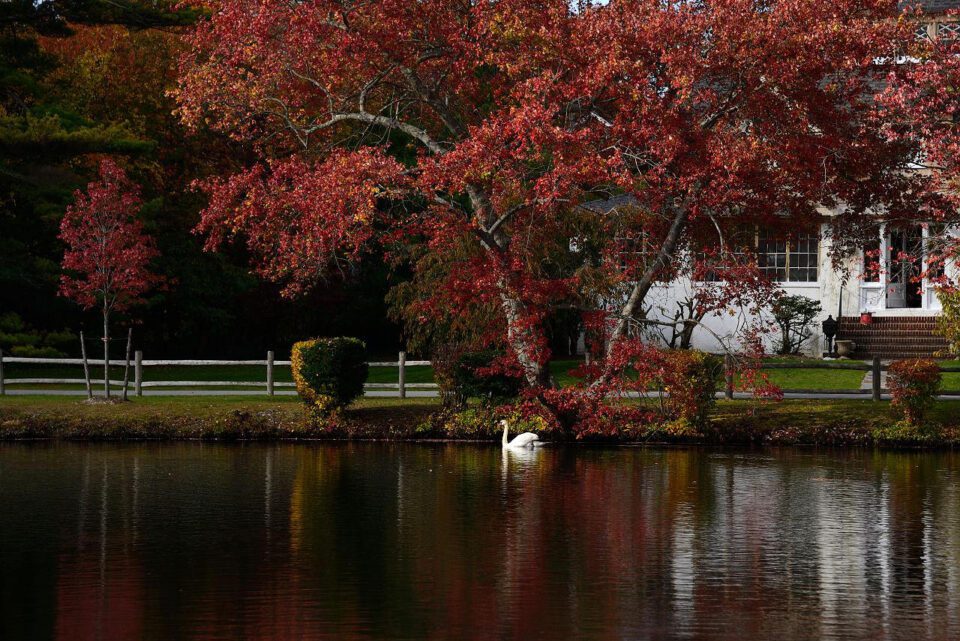
Set Your Metering Mode
The next groundwork setting is the Metering Mode. This can besides change during a shoot, simply unremarkably you lot develop a favorite metering method and stick with it until circumstances call for a different i. For a beginner, a dainty general metering method is "Matrix" metering, which does a nice job at evaluating the whole scene and giving you lot fairly accurate metering readings. Nasim's article on Metering for Beginners will explain all well-nigh that and why information technology is a prissy full general method. So for at present, set your metering method to "Matrix". However, if you lot conform your settings based on your photographic camera meter and things wait too dark or besides vivid, and then you might need to switch to some other metering mode such equally "Spot", so that your subject field stays properly exposed.
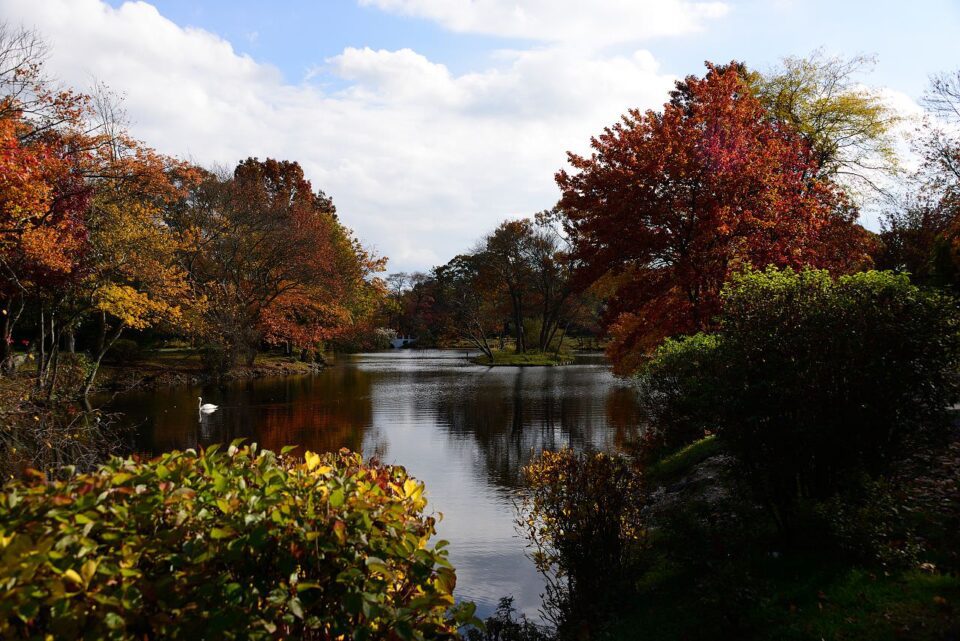
Camera Exposure
Now we come to the non-background settings. They are the "large three": Aperture, Shutter Speed and ISO. They are all interdependent, but every bit I've said before, you lot have to kickoff somewhere, and so information technology becomes necessary to choice one and go from there.
Fix Your Camera ISO
I am going to advise you to start with your Camera ISO. You have to option an ISO based on the low-cal conditions of where you are going to exist shooting. So, for example, accept your camera and pace out the forepart door. Assess the light. Is it a bright sunny solar day? Is it a cloudy day? Is it a dark and gloomy day? Let's say it is a vivid sunny day. In that case, set your ISO to the lowest number, such as ISO 100. If it is a cloudy twenty-four hour period, you lot might need to set your ISO to a larger value such as ISO 400, and if it is a dark and gloomy mean solar day, you might need to push button ISO further to something like ISO 800, or even ISO 1600. These are merely numbers to commencement with until you get the hang of ISO for yourself. If the conditions stay the same throughout your shoot, you can set your ISO and forget almost it. Then…one down.
Fix Your Discontinuity
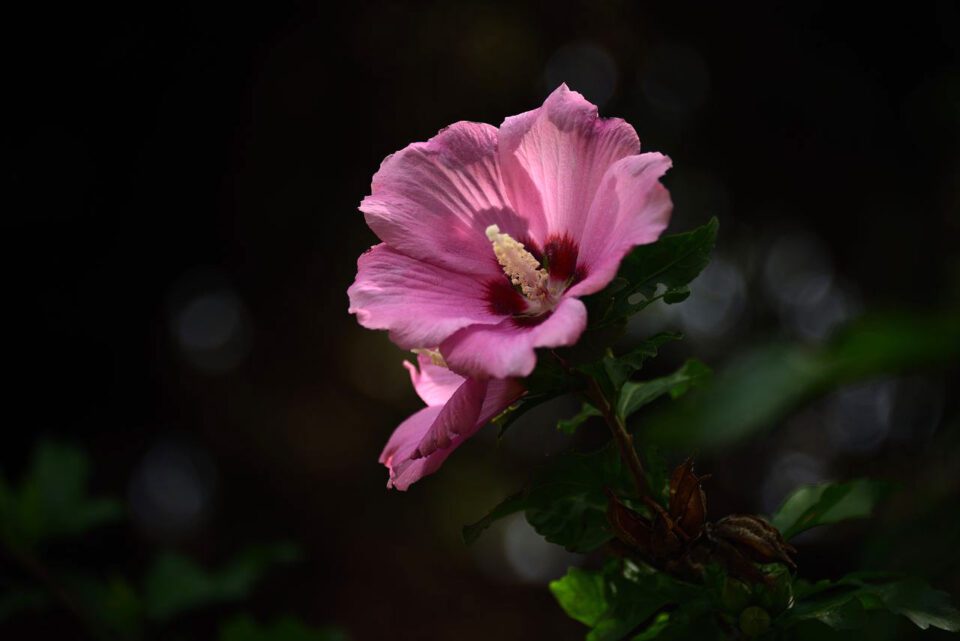
Next decide on your lens Aperture. Do you lot want shut-upward pictures with those nice blurry backgrounds with the strange name of bokeh? Do you want pictures that are sharp from forepart to back? Practice you want something in between? Permit'due south say y'all want a closeup picture show with overnice bokeh. Set your aperture to the lowest f/ number that your camera has, such as f/2 or f/three.5. Practise you want a overnice sharp landscape photo? Prepare your discontinuity to f/5.half-dozen or f/8 to start with. Do you lot want something in between those two? Ready your aperture in the mid range, maybe f/4. Y'all go the idea. For at present, don't try f/xvi or smaller…notwithstanding. Instead, showtime with something like f/v.6.
Discontinuity can get a bit disruptive for beginners, because a modest number similar f/2 represents a larger aperture, whereas a large number similar f/sixteen represents a smaller aperture. Bank check out the aperture commodity I linked earlier for more details on why this is the case.
Being able to control how much you have in focus is important and y'all can read about Depth of Field in more item to understand how unlike variables touch your images. Most chiefly, don't underestimate photographic camera to bailiwick distance – that'due south the biggest variable of them all!
Ready Your Shutter Speed
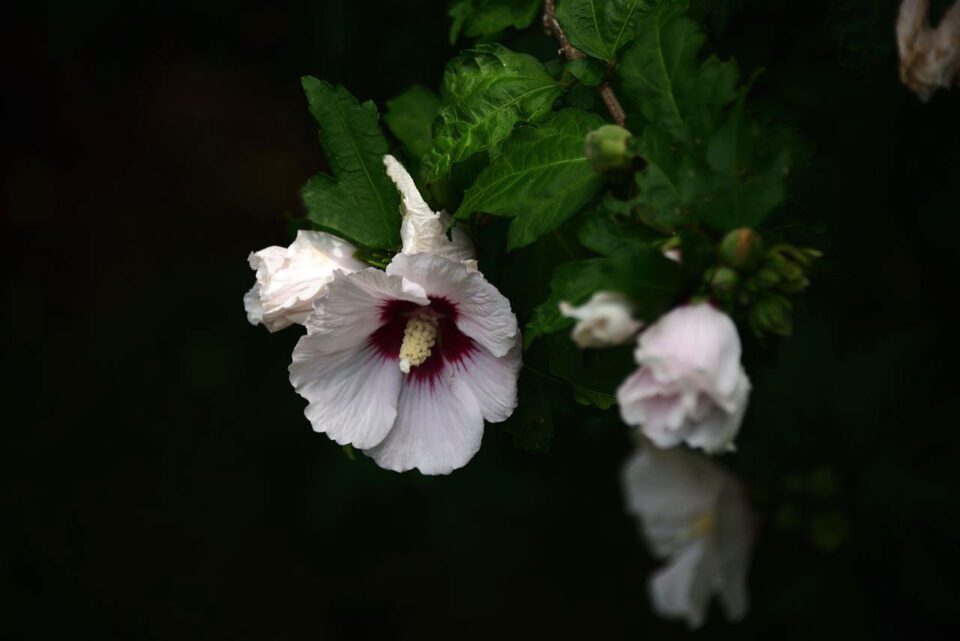
The third and the concluding of the big 3 is Shutter Speed. This one should always be set last, every bit it is then dependent on the other settings. Both Camera ISO and Aperture settings that you set earlier have told your camera how much low-cal to let in through the lens and how your camera sensor volition capture it. Now you have to control that low-cal with how fast your camera shutter opens and closes when you take the photo. When yous set your camera to manual mode, your shutter speed indicator will appear in your viewfinder as a agglomeration of little vertical lines bisected with 1 unmarried bigger vertical line right in the middle (some cameras volition have the metering bars displayed on other sides of the viewfinder):
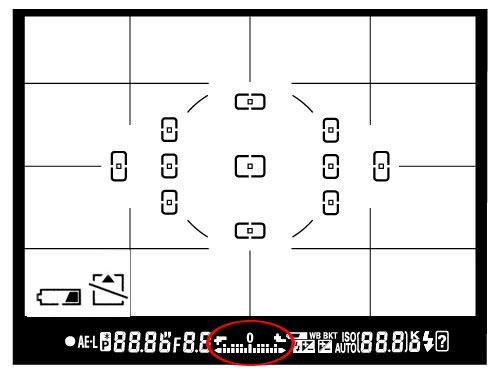
There are also little lights that appear that will tell yous if you are choosing an exposure that will work, but for this moment we volition not pay attention to that light. If you accept read the other articles almost shutter speed, you will know that all the little lines to the left will make your motion picture darker, because the shutter speeds are faster and will restrict the light coming into the sensor. The picayune lines to the right volition make your picture brighter, considering the shutter speeds are slower and will permit more light onto the sensor. What I volition accept you do is set your shutter speed to the center vertical. That will give yous a proficient exposure to starting time with. Every bit y'all practice more and more, you lot will exist able to decide how you lot want your pictures to look and will exist able to go off the center with increasing confidence. Three complete!
Putting it All Together
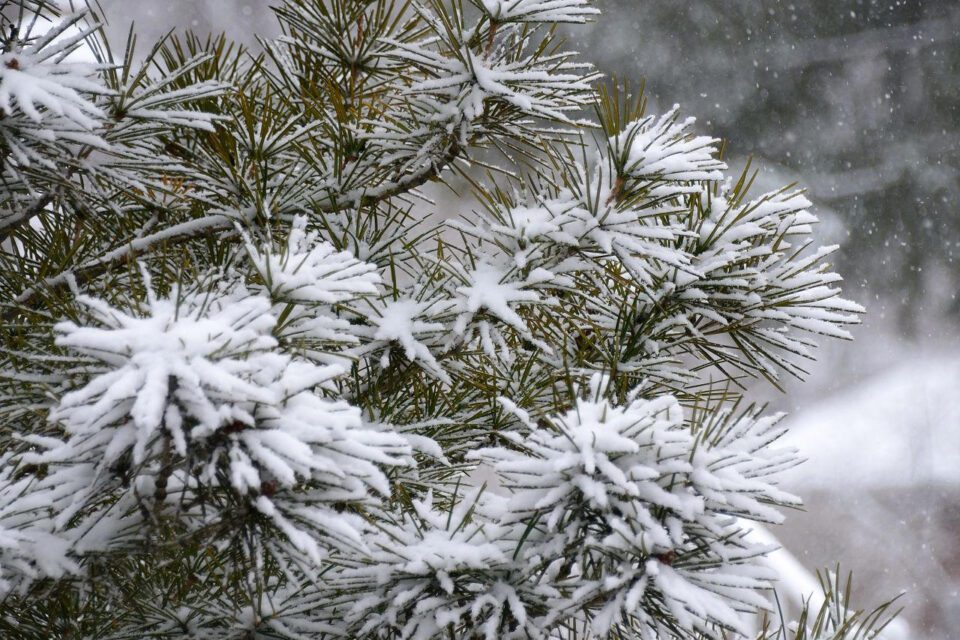
Well, hither we are with all the settings for your camera ready for you to try a manual photograph. Pick a sunny day to showtime. To recap, we have chosen WB of 5260, Matrix Metering, ISO 100, Aperture of f/five.half-dozen, and Shutter Speed on the eye vertical line. On this sunny twenty-four hour period that shutter speed might read something like 500 (technically information technology is i/500 of a 2d), but it could be larger or smaller in value. It all depends on whether y'all are shooting into shadows or vivid light, night trees or low-cal colors. Don't shoot into annihilation white just nonetheless – it is besides before long. Shooting white things has a special challenge where you might be overexposing or underexposing, so pick something else to aim at.
Take a deep breath to steady your nerves. Fix, set, focus and shoot!
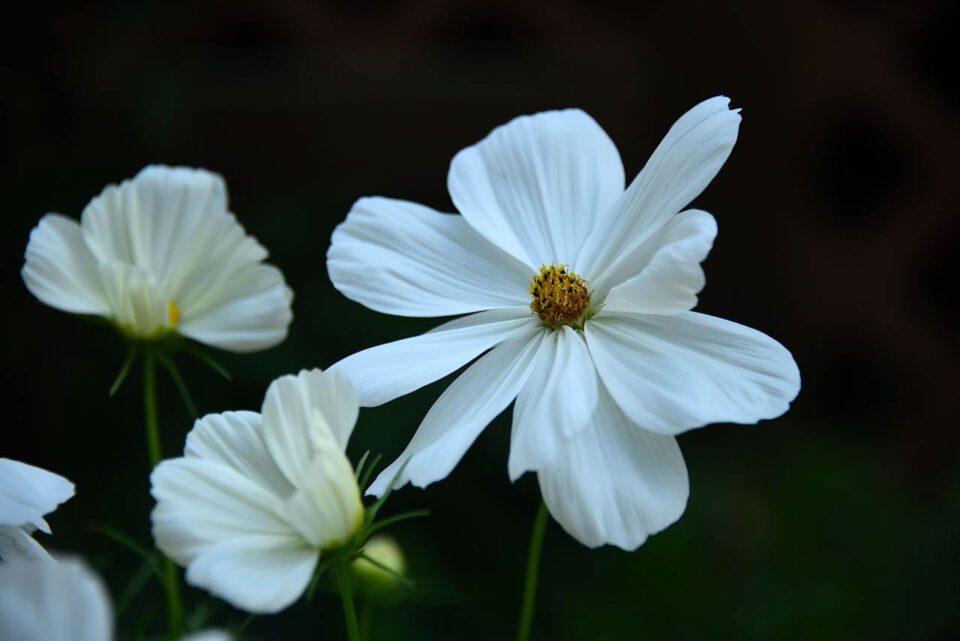
How did yous do? If you lot got a terrible moving-picture show, don't despair. Digital photos don't toll anything to develop. But effort over again.
Ane more thing. Yous should be shooting in RAW format and so that you can suit your photos when you make mistakes. If you don't have any software for post-processing, I recommend using your camera's own software to do your exposure corrections with (such equally Capture NX-D). From in that location, you should be able to do basic edits, such as cropping, straightening your paradigm or tweaking colors, and convert to JPEG file format. For those who think that post-processing is a PITA (pain in the a**), you should know that correcting mistakes in mail is where all the learning happens. Post-processing makes you a amend photographer. Say you find yourself shooting nighttime all the fourth dimension and constantly have to lighten your pictures. Eventually, it will dawn on you to slow downwards your shutter speed in the camera, or tweak your photographic camera's ISO to make your epitome look brighter. Say you keep shooting your pictures off heart. Having to constantly crop your photos will teach you to start composing pictures meliorate. Say your pictures e'er come out a little as well blue. Yous will figure out through correcting your white balance in post what white balance to try in the camera that will be more satisfying to your centre. Post-processing is your friend and you lot volition soon come to see its value every bit a tool for you to become the best photographer that you lot tin exist. Then delight, always shoot in RAW format and acquire to post-process!
This method will work. Simply persevere and discover the fun of shooting manual. After a while, y'all will discover that you have lost all your fearfulness. All these settings volition become 2d nature to you, and yous will get really good at choosing what settings you need for whatever situation y'all notice yourself shooting in. Just continue on shooting and don't stop. And have FUN! Before yous know information technology you will stop thinking of yourself every bit an amateur and start thinking of yourself as an advanced photographer, or a semi-pro and maybe even someday a pro!
Good deal!

How To Use A Digital Camera Manual Settings,
Source: https://photographylife.com/manual-mode-photography
Posted by: wrightellonly.blogspot.com
0 Response to "How To Use A Digital Camera Manual Settings"
Post a Comment